FutureX Capital Summit brought founders, investors, and ecosystem leaders together in Greenville for two days of conversations around AI, leadership, growth and what it takes to build enduring companies. While each speaker brought a different perspective, the conversations consistently pointed back to the same challenge: how founders can continue building smarter businesses in a rapidly changing world.
AI is changing how companies are built
Artificial intelligence wasn’t treated as a trend throughout the summit. It was discussed as a fundamental shift in how startups build, operate and grow.
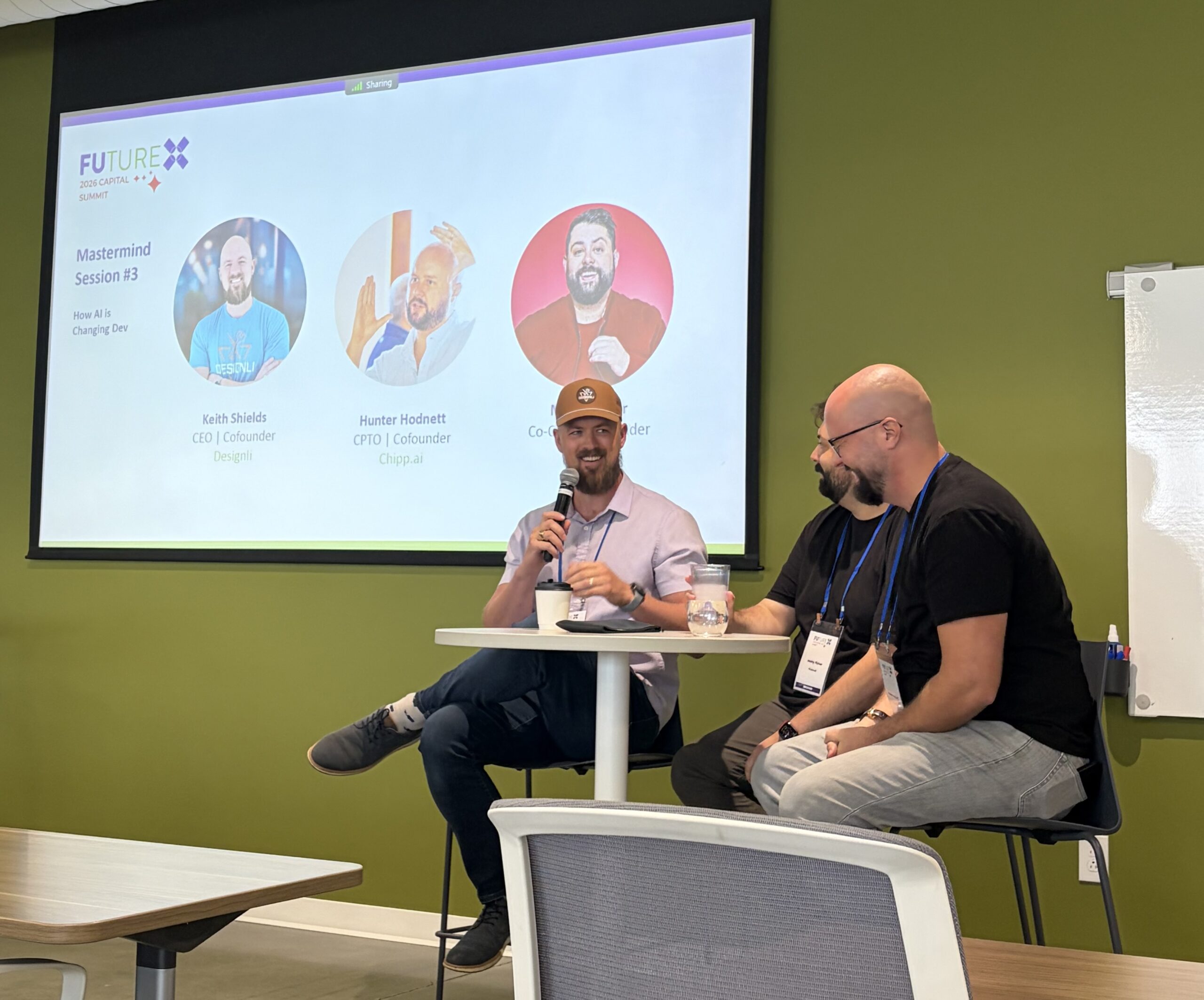
Hunter Hodnett of Chipp.ai shared one of the day’s most memorable examples. After letting go of his engineering team, the company rebuilt its platform using autonomous AI developers. A product that originally took two years to develop was rebuilt in just six weeks. That work eventually led to Bugbot, an AI-powered Slack agent that reads code, fixes issues and verifies them in a browser before shipping updates.
Perhaps the biggest takeaway came from how the product itself evolved.
“We didn’t theorize a market. The market revealed itself by watching our AI work.”
Brian Platz of Fluree continued that conversation by asking founders to consider what happens when anyone can generate software. If code becomes abundant, he argued, the real value shifts to judgment, trust, distribution and knowing what problems are actually worth solving.
David Hyde-Volpe of Crushable brought the discussion back to practical implementation with simple advice: start with one painful process, let AI draft the work and keep humans responsible for approval.
Building is only half the challenge
Creating a product is one thing. Growing a company is another.
Shane Grivich of ChartSpan shared how the company shifted away from traditional lead generation and toward demand generation by putting partners at the center of its growth strategy. Rather than focusing solely on filling the sales pipeline, ChartSpan invested in developing relationships that continue creating opportunities over time. Today, those efforts have grown into a network of more than 55 active partners.
That idea surfaced throughout the day. Whether discussing partnerships, revenue operations or customer discovery, speakers emphasized understanding who actually makes buying decisions and spending time with the right people. Sometimes learning that someone isn’t your customer today is just as valuable as closing a deal.
Leadership still matters most
While much of the summit focused on technology, several speakers reminded attendees that companies ultimately rise and fall because of leadership.
Garrett Stern encouraged founders to build organizations that don’t depend entirely on them, emphasizing that delegation isn’t giving work away. It’s creating a company that can continue growing beyond one person’s capacity.
Mick Hunt challenged leaders to “Lead Loud,” arguing that people aren’t waiting for perfect leaders. They’re waiting for leaders who communicate clearly and make decisions. His advice to follow the “70% rule” encouraged founders to make informed decisions, put deadlines on them and adjust as they learn instead of waiting for certainty.
Marty Osborn of By Design expanded the conversation beyond financial investment, reminding attendees that every day people decide whether to invest their time, careers, information or capital into a company. Trust, execution and adaptability remain just as important as the product itself.
Thinking beyond today’s milestones
As the summit continued, the conversation shifted toward building companies with long-term value.
Joe Mancini of Front Porch Capital shared why he’s optimistic about the Southeast’s startup ecosystem, pointing to population growth, wealth migration, increasing venture investment and expanding founder networks. His message was encouraging: the Southeast continues to mature, and founders building here are well-positioned to benefit from that momentum.
Jemiah Battle closed with a reminder that building a valuable company means thinking beyond today’s revenue. Buyers don’t simply purchase profitable businesses. They buy confidence. Confidence that a company can continue operating, growing and creating value without depending entirely on its founder. Planning for an exit, he argued, shouldn’t happen at the end of the journey. It should begin alongside the business itself.
Greenville founders took the stage
The conversations weren’t limited to keynote sessions.
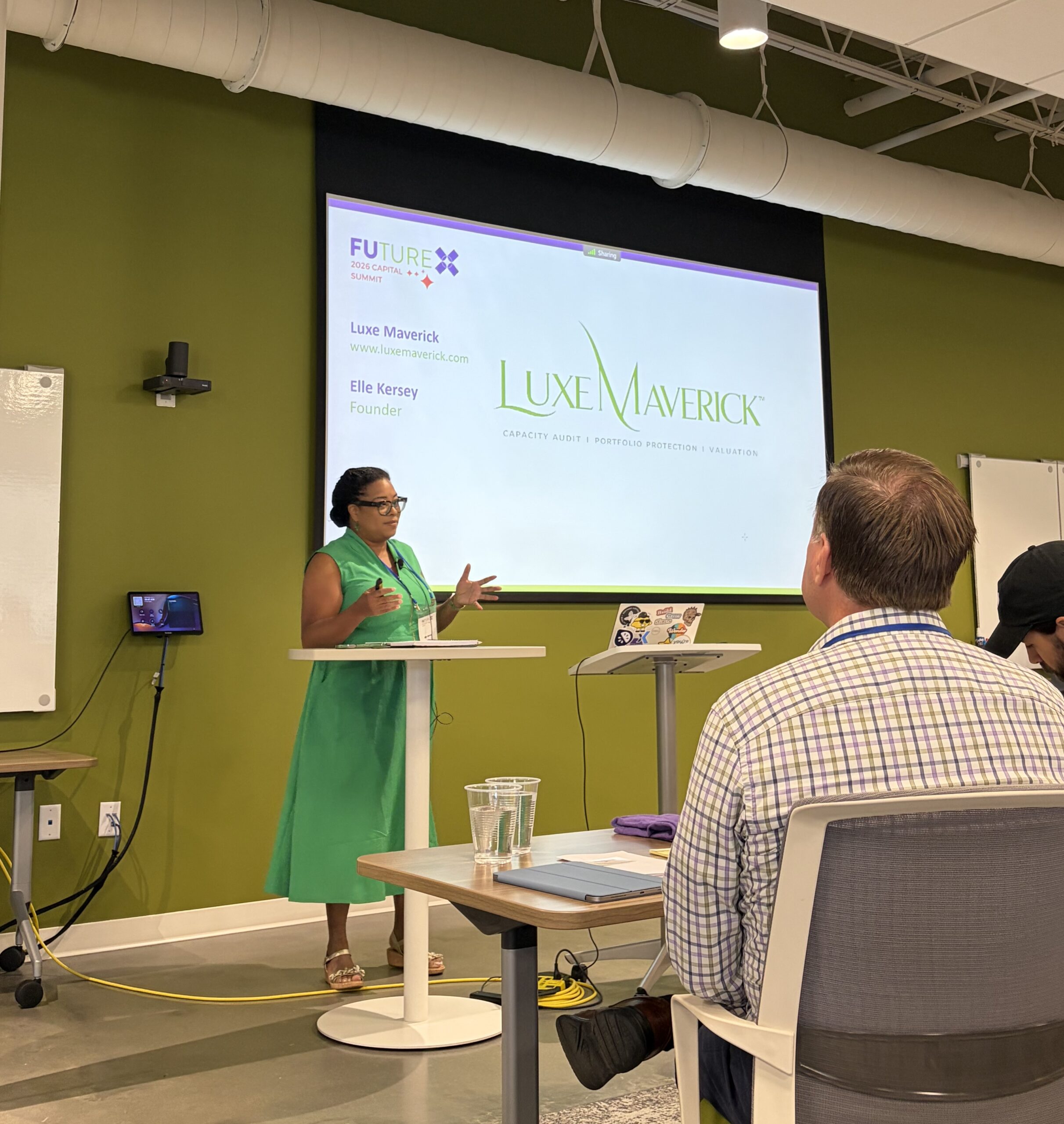
Throughout the second day, founders from across the StartupGVL ecosystem took the stage to pitch the companies they’re building, showcasing the depth and diversity of innovation happening across our community.
The presenting companies were from the FutureX cohort and Founderville investments and included: AspireVue, Builder Rocket, Chipp.ai, Go Fig, Greener Fleets, Luxe Maverick, MyMechanic, Pixlmob, Sports Data Collective, StopLyte, SmartKoz and ThreatCaptain.
Many of these founders are active members of the StartupGVL community, regularly participating in programs, workshops, and networking events. Watching them present at FutureX wasn’t just a highlight of the summit. It was a reminder of how much talent exists right here in Greenville. We’re proud to celebrate these founders and the role they play in strengthening our startup ecosystem every day!